Projects
2022 · Chilliwack Mural Festival
Chilliwack, British Columbia
I came to Chilliwack from Denver, the city of my birth, where I had been staying with my Grandma Nona and painting the Federales mural named for her.
That project was nearly finished when I learned that Elder Lloyd “Buddy” Wesley, my friend and collaborator on Anâraptâ, had died of a massive heart attack while alone in the woods.
Chilliwack was a stop on the way to a surprise visit I had planned with him.
Buddy called me Little Brother. He was the only man I called Big Brother. He used to tell me they never said goodbye. Only, “See you later.”
This painting is dedicated to him.

It almost never happens that someone invites an artist to paint a prominent downtown wall without first asking for a sketch.
Then again, not everyone is Amber Price.
Her invitation to the Chilliwack Mural Festival had been open for some time. I arrived exhausted and grieving, and was embraced by her family, in their home, pets included. A loving and vibrantly living room to land.
We share an appetite for public art that could be described as unreasonable. No sketch needed – she trusted me to find the painting there.
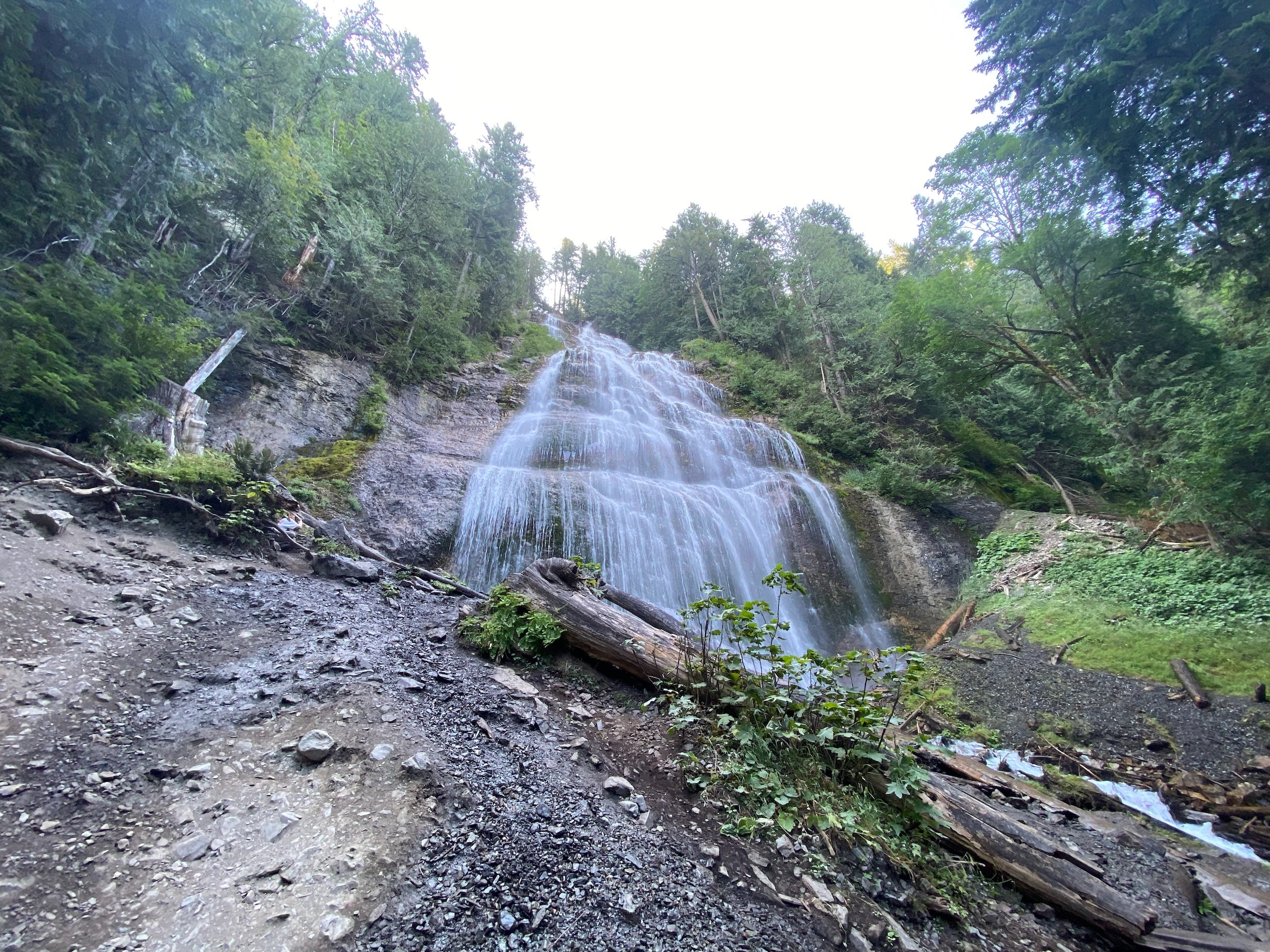
We explored with fingers stained by blackberry juice: cornfields, bridal falls, cultural centres and introductions to people in local First Nations communities. Sitting on railway trusses over the Fraser River, we talked public art with flushed cheeks.
Through Amber, I also met Mari Ozaki, who became my Jikiden Reiki teacher. I began studying with her on weekends while the mural unfolded.
People stopped at the wall with vegetables, laughter, dreams and tears. After each conversation, I turned back and picked up the brush. Something of the exchange entered each new stroke.

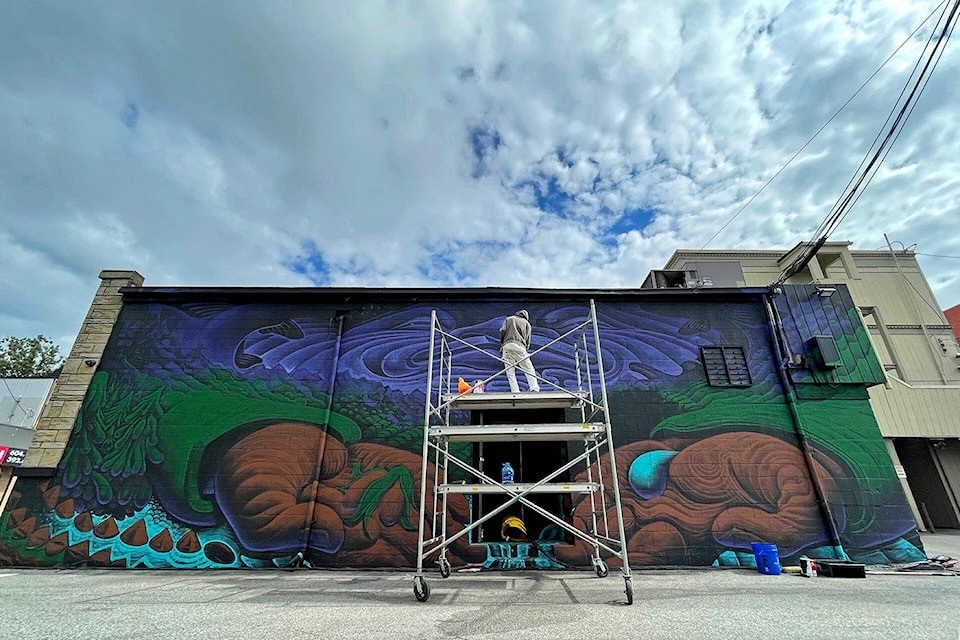
A deeply recessed doorway in the middle of the wall offered people a place to shelter. I made it central to the painting, sending rushing water through the recess and onto the pavement.
Painting murals is, for me, an expression of care and curiosity. As the doorway changed, folks continued to find welcome there — and in turn, seemed to bring more care to it themselves.
That reciprocity is part of the magic: care offered through a painting becoming care for a place.
Working there gave me time to learn how others experienced those streets. Tommy began stopping by. He had recently returned to Chilliwack after years away and spoke of how hard life had become in a place he once knew well.

Around the corner, I wanted to paint a prayer found in a book during our visit to the cultural centre. Attributed to Ernest Tootoosis, it asked the river for protection while crossing, and help reaching family.
Tommy knew him. I asked how to find him.
“Did you call him?”
“What? How??”
Tommy turned and spoke into the air.
“Ernest, this guy here needs to talk with you about something. I don’t really know what about… but whatever. Come over here when you get a chance, eh. Oh yeah… I wanna see you too.”
He turned back, his part of the job apparently done.

Tommy later found Ernest’s photograph on the community centre’s memorial board.
“I can’t give you permission,” he told me, “but we’re not gonna say nothing.”
We said a prayer for him. I ultimately painted that passage with Ernest’s name beneath it.

Looking at the mural, Tommy spoke of the hands as those of the Fraser itself. He remembered small metal boats creaking in its grip. To fall into that current, he told me, meant being pulled into darkness, tumbling with boulders and grizzly bears.
The sturgeon was king there, moving through the force with prehistoric grace. Its ridged back runs along the painting’s lower left.
His stories gave the prayer—and the image—a weight I could not have supplied alone.

On later visits, Tommy was frightened, feeling threatened and unsure where to go. We talked about taking his fear to the river, in prayer. I gave him tobacco.
When he returned a couple days later looking worse, I asked whether he had gone.
“Nope. Should have. Smoked all that tobacco you gave me.”
I offered more, then asked whether he wanted Reiki.
He had never heard of it. I explained the practice as I was learning it: I would place my hands on his back, and we could each notice what we felt.
He agreed.
Sitting on an orange bucket, with me on the scaffolding behind him, he fell asleep.
When he woke, he stood, took a breath and complimented the colours I had added, then left.

A few days later, he returned looking much brighter. The situation that had frightened him had cleared up, he told me.
He stayed for a couple of hours, much of it in quiet company. I offered Reiki again. He accepted without hesitation.
Afterward, he spoke of the river, then his family. Remembering the abuse he had witnessed his mother endure at home, he reached a point where he could no longer speak.
We stood beside those painted hands and wept.

“I am not afraid.”
He repeated those words three times, then drew a deep breath.
Black Wranglers, white button-up tucked in, leather bomber and a big black cowboy hat.
He turned.
I never saw him again.
Related projects
© Jason Botkin