
Projects
Windsor, Nova Scotia, Canada · 2021
The Avonian Place mural began during the uncertainty of the pandemic, with a commission from the local business association to replace an existing mural in downtown Windsor.
The old painting had reached the end of its life. The wall beneath it — and much of the building around it — had needed attention for years. Plywood was installed over the mural area to provide a new painting surface, but the surrounding deterioration remained.
I struggled with the prospect of a finished mural sitting against peeling surfaces and neglected details. This prominent corner deserved an effort that extended well beyond the edges of the bandaid.
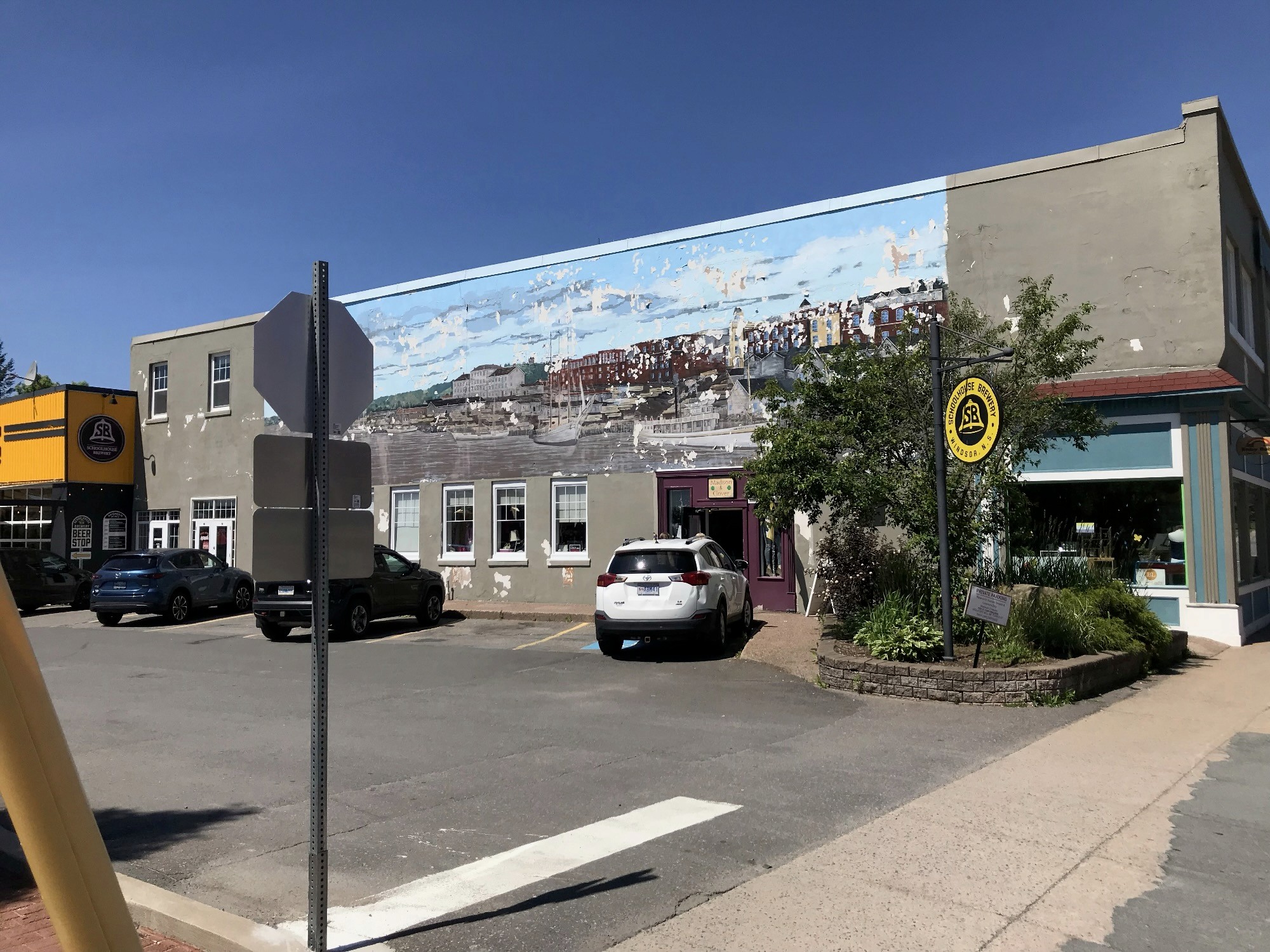
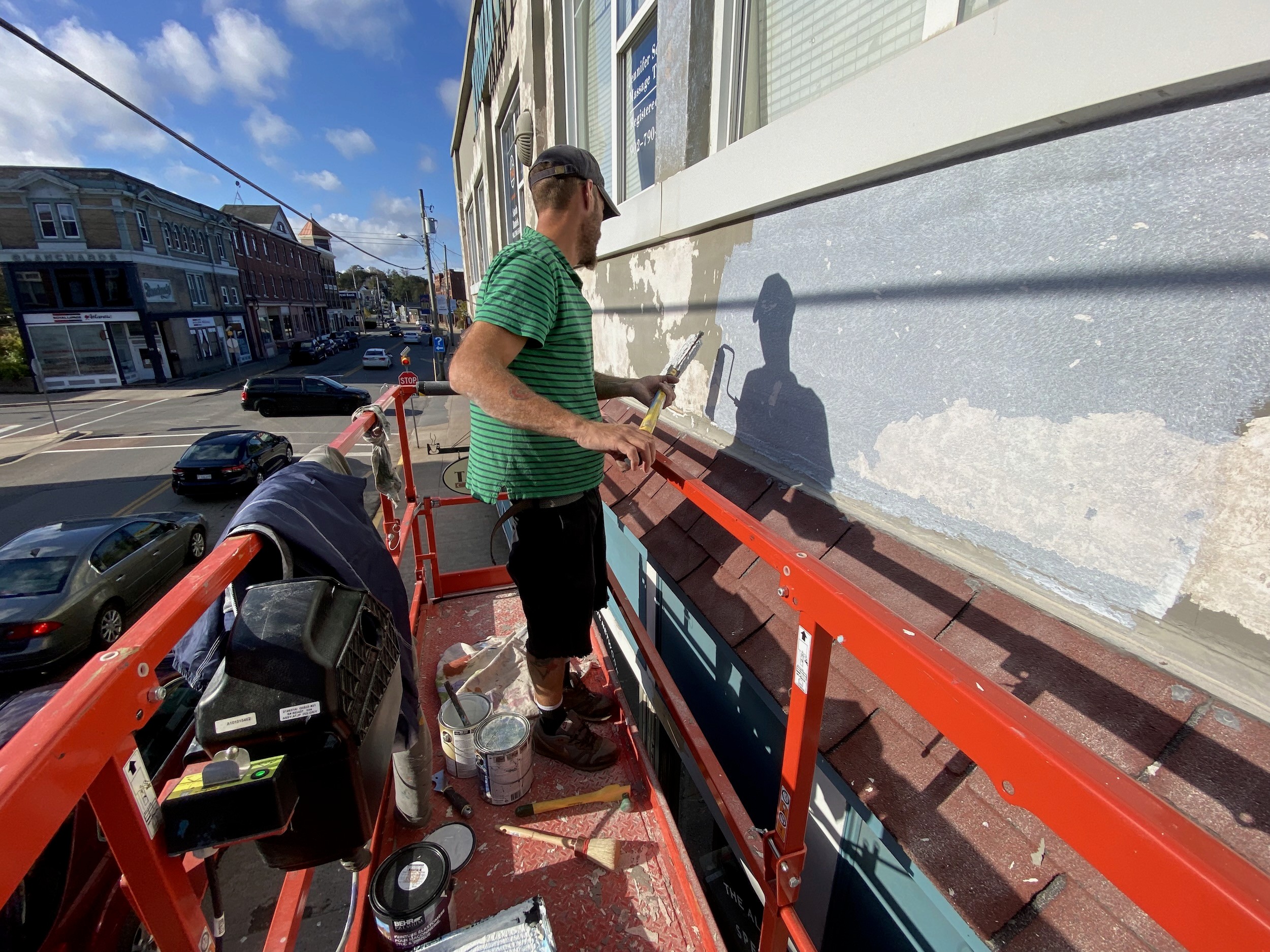
I devoted nearly twelve days to exterior repairs and repainting the building. Materials came from the mural’s limited production budget; I contributed the additional labour.
Surfaces needed scraping, repairing, sealing, caulking and sanding. It was intensive work, much of it destined to disappear beneath the finished paint. Weather interrupted the process, and Atlantic storms added pressure to an already demanding schedule.
What began as a commission to paint one stretch of wall became the most time-consuming project of my career.

At the time, I was in the early days of an ongoing experiment with more open forms of exchange. I wanted to invite a conversation about how cultural work is valued, and what people might contribute when an arrangement leaves room for initiative and reciprocity.
We discussed those ideas, but I struggled to make the proposal clear. I took on the expanded work before establishing how the additional labour, time and costs would be supported. I believed we had reached more common understanding than we had.
I bear responsibility for that. My decision to do more did not, by itself, establish what others had agreed to contribute.

I worked through the days and often into the night. People stopped to talk, watch the painting develop and comment on the effort involved.
I heard that repeatedly. It expressed recognition, but it also brought a familiar difficulty into focus: people can appreciate an artwork, and even the effort unfolding before them, without seeing the years of practice that make it possible.

Artists care deeply about what we make — commitment can be mistaken for a willingness to work regardless of compensation. I also needed to recognize how readily I could reinforce that expectation by continuing to give beyond my means.
The distinction between the original commission and what I actually did remains largely untold.

Two locals helped me at different stages.
A troubled but very eager young man who visited the wall regularly assisted on several occasions, clearing renovation debris and helping prime the surfaces. I paid him from my own pocket.
Toward the end, a local emerging artist helped me complete the final stage of production. I paid her what I could, though it was modest compensation for help that mattered. The accommodation budget was exhausted, and I had reached the limit of what I could carry.
I had completed the work, but the broader conversation about shared value and exchange had not taken shape. I discovered that openness needs explicit agreements: about scope, payment, practical support and what happens when the work changes.
Generosity needs boundaries if it is to remain a choice.
I remain deeply proud of the work — of the painting, the repairs and the effort I brought to that corner.
The artist who helped me finish has since received commissions for her own murals and large-scale paintings. The building owners have also paid her to maintain and repair this mural—a continuation I’m very tickled to see.
Any sense of disappointment has helped direct what came next, and for that I have only profound gratitude for the opportunity to paint, with trust, and to continue trying to articulate an unconventional practice: what I offer, why I work this way, and what makes that work possible.
The website you are reading is part of that effort. It gives space to the intentions, decisions and labour that a finished image alone cannot convey.
Related project
© Jason Botkin