Jason Botkin
A boy rides a scooter past a fenced playground, the mural of circles and pale forms on the wall behind.

Painting · Public space

Racines
du Ciel

Racines
du Ciel

Square Juliette Dodu
Paris, France — 2025

A small park.

A small park.

A place of everyday civic care.

A place of everyday civic care.

Painted over ten days in June 2025, Racines du Ciel was created for Square Juliette Dodu, a small intergenerational park in Paris’s 10th arrondissement.

Supported by the Mairie du 10e and the association He(ART)4ALL, the project grew from an effort to strengthen connections between residents and a neighbourhood gathering space.

A wall in a small Paris square half-primed dark brown, plastic sheeting and a red lift around it.

Rather than depicting the people who use the square, the work turns toward the living systems that make their shared life possible.

Rather than depicting the people who use the square, the work turns toward the living systems that make their shared life possible.

This one begins with a place.

Most portraits begin with a face.

Drawing from the colours, textures, and plant life of the square, the composition moves between microscopic and landscape perspectives: roots, leaves, soil, and atmosphere.

Pale circles spread across the dark brown wall above a fenced, tarp-covered square, a red scissor lift at one side.

The portrait is not of the park itself.

The portrait is not of the park itself.


The portrait is not of the park itself.

It is of the relationships that sustain it.

It is of the relationships that sustain it.

It is of the relationships that sustain it.


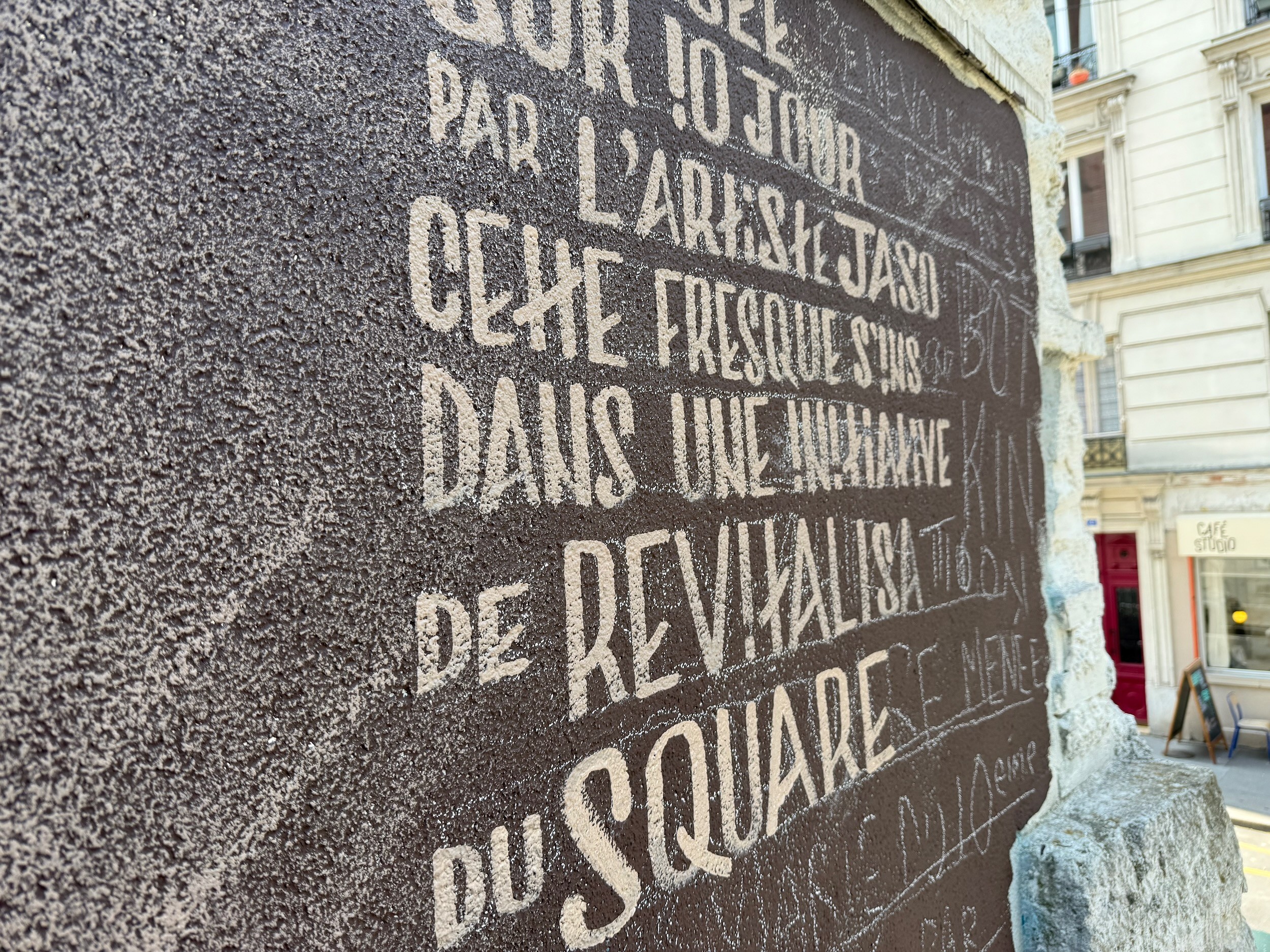
Close-up of white stencilled French lettering on the dark wall, describing the mural and the revitalisation of the square.

The project began with a question:

The project began with a question:

How do people learn to care for a place?

How do people learn to care for a place?

Much of what sustains a place goes unnoticed. Trees mature slowly. Roots spread underground. Neighbours tend shared spaces through small acts that rarely attract attention.

Much of what sustains a place goes unnoticed. Trees mature slowly. Roots spread underground. Neighbours tend shared spaces through small acts that rarely attract attention.

The mural was designed to slow perception down—to encourage visitors to notice details they might otherwise overlook.

The mural was designed to slow perception down—to encourage visitors to notice details they might otherwise overlook.

Textures. Patterns. Plant life.

Stewardship begins by learning to see.

Stewardship begins by learning to see.

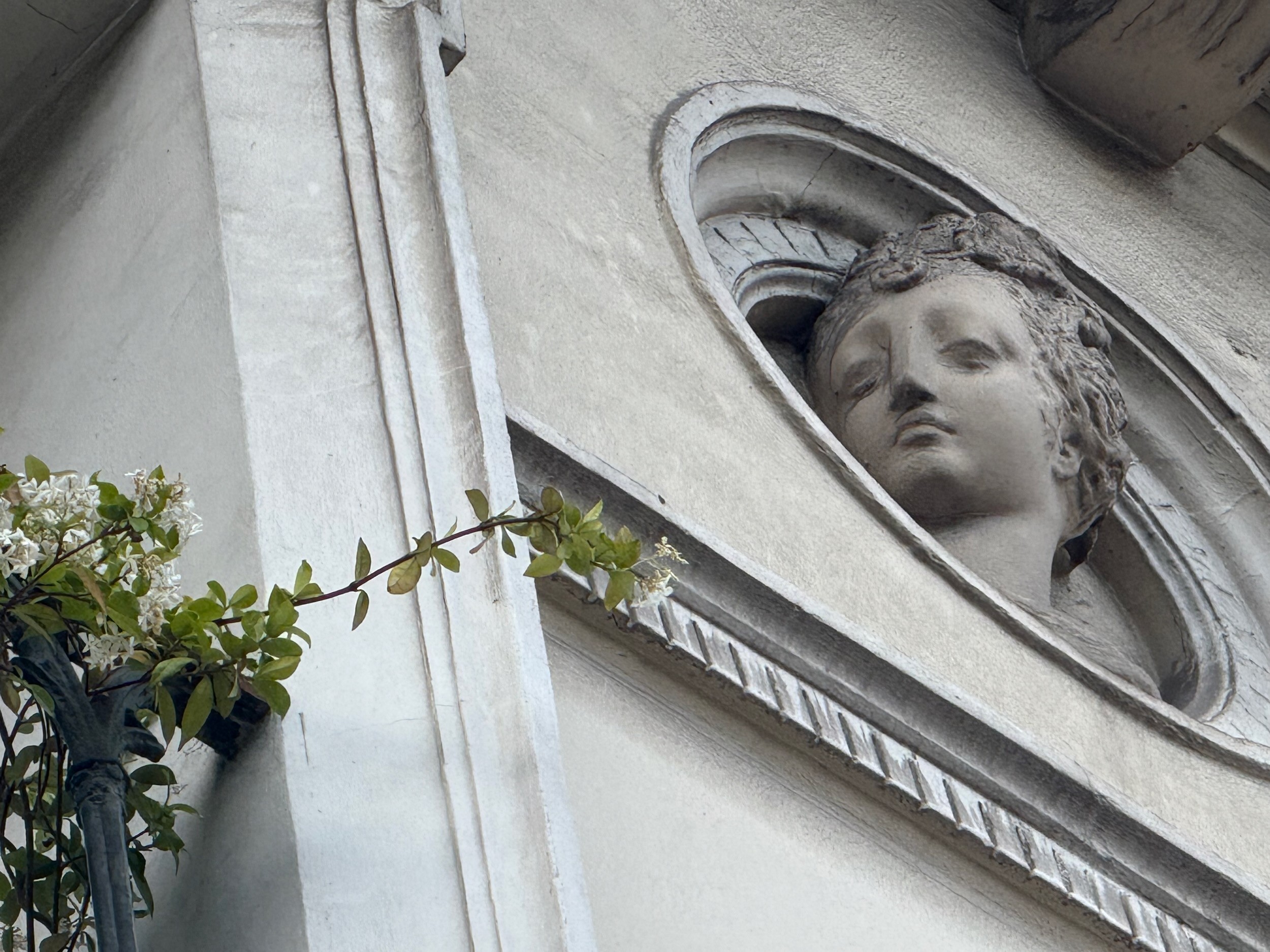
A carved stone face of a woman looks out from an oval niche on a Paris building.

While the mural occupies a single wall, its subject extends into the shared life of the square.

The project brought an artist, residents, a local association, and public institutions into a common undertaking. Making the work became a way to explore how responsibility for a place might be shared.

What becomes possible when people recognize themselves as caretakers rather than consumers of place?

What becomes possible when people recognize themselves as caretakers rather than consumers of place?

What becomes possible when people recognize themselves as caretakers rather than consumers of place?

Pale circles and teal forms curve across a building's grey wall, seen from below.

The strongest public spaces often feel effortless.

The strongest public spaces often feel effortless.

Yet someone is always tending them.

Yet someone is always tending them.

A gardener tending a flower bed.

A gardener tending a flower bed.

A neighbour picking up litter.

A neighbour picking up litter.

A parent watching children play.

A parent watching children play.

A city maintaining a park.

A city maintaining a park.

An artist paying attention.

An artist paying attention.

We protect what we love.

We protect what we love.

We protect what we love.

The same question continues, at a different scale.