Projects
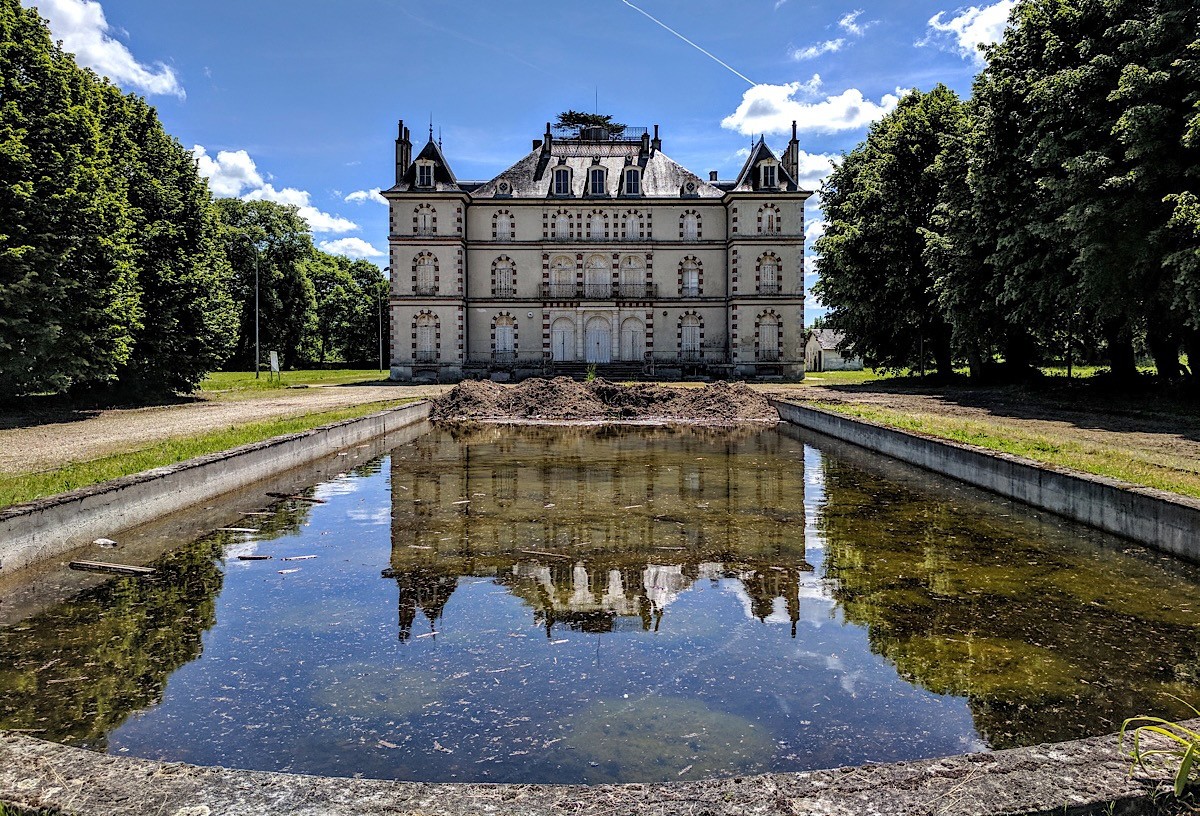
Château de Pressigny-les-Pins, France
Site-specific installation · Approximately four hours
I arrived early in the life of LaBel Valette, when the festival was still taking shape in the minds of its organizers. Only a few artistic interventions were in place across the abandoned property.
Frustrating train delays had reduced my visit to a meagre eight hours. A brief tour with Sébastien Lis, one of the festival’s creators, became the starting point for what I could make in that time.
We walked through a château that had later served as a Spanish boarding school, then stood abandoned. Dormitories, discarded school materials and the remains of daily life occupied its rooms.
There was plenty to work with, and very little time to think it through.
The room I chose was empty.
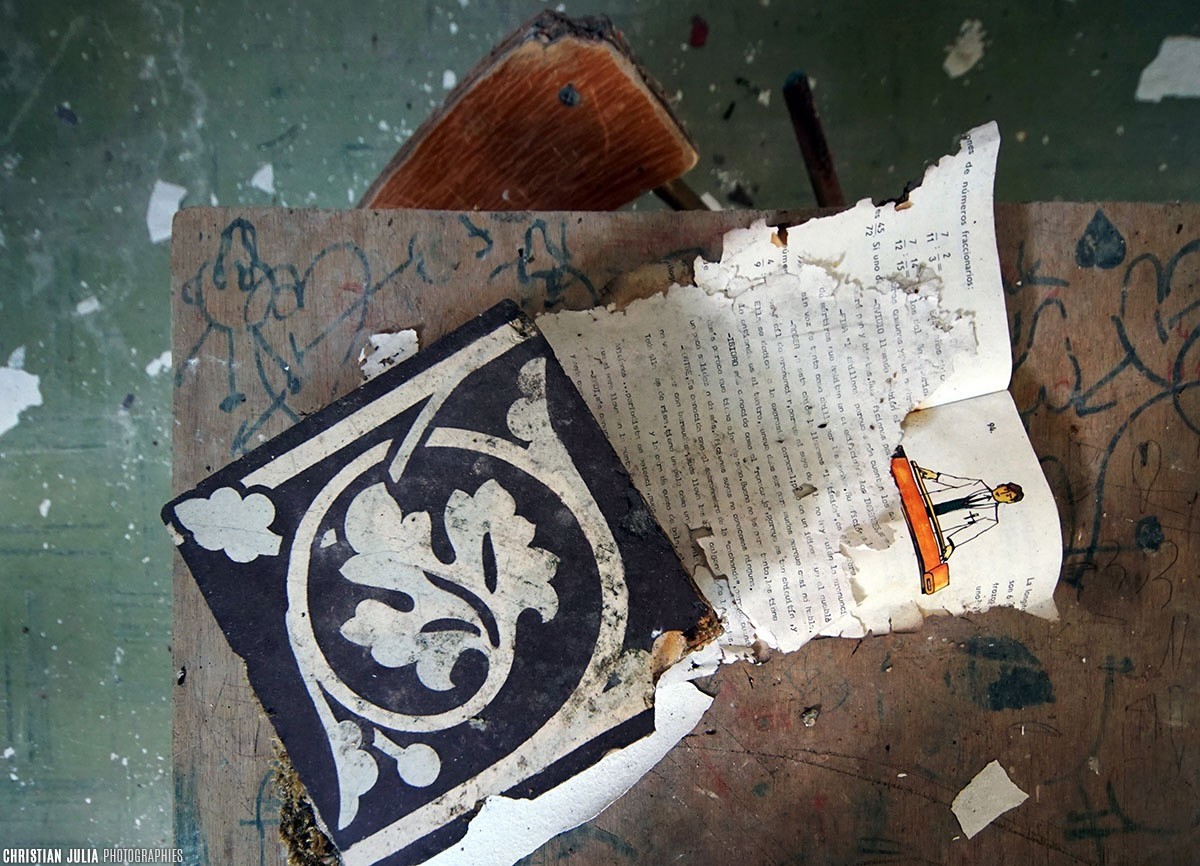
Elsewhere on the property, Sébastien and I pulled a broken child’s desk from the weeds of a collapsed section of the building. Its surface was covered in doodles—the accumulated daydreams of children who had spent time sitting there.
In forgotten corners were decaying textbooks, loose pages and handwritten essays on lined paper. I gathered some of these remnants and brought them into the room.
The desk sat beneath a window whose missing glazing let in green light through the foliage of the old trees outside. Two large, open hands painted on the flanking walls framed it.
From the short hallway leading in, the room appeared almost empty. The small desk held your attention.

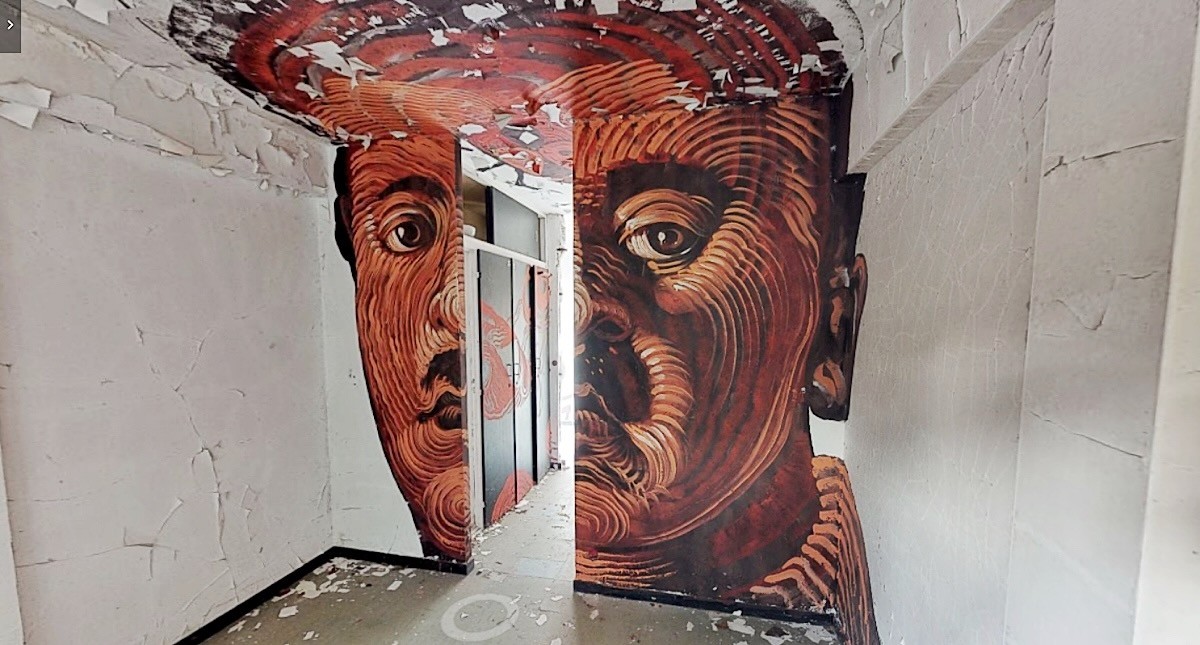
Only after entering and turning around did you meet Franco.
His portrait occupied the wall around the doorway you had just passed through. The opening cut his face in half.
At that scale, the encounter was difficult to avoid. Yet I found his expression strangely hard to read: cold and severe from one moment to the next, almost warm or inviting. That ambiguity interested me.
The doorway interrupted the face, while your movement determined when and how you encountered it. You had entered a room with a child’s desk, and now a dictator was looking back.
The hands were raised and open, suggesting an appeal to work and loyalty to the state.
Between them sat the desk, with all those small acts of distraction scratched and drawn across its surface.
A fragment of Franco-era propaganda rested among the papers.
I kept wondering about the children who had used these things. What had they been asked to learn? What had occupied their minds instead? Who had they grown up to become?
The building’s history gave those questions an unsettling proximity. The materials were already there, left behind long before I arrived. Bringing them together allowed the room to hold a conversation between the authority of the portrait and the traces of individual lives beneath it.
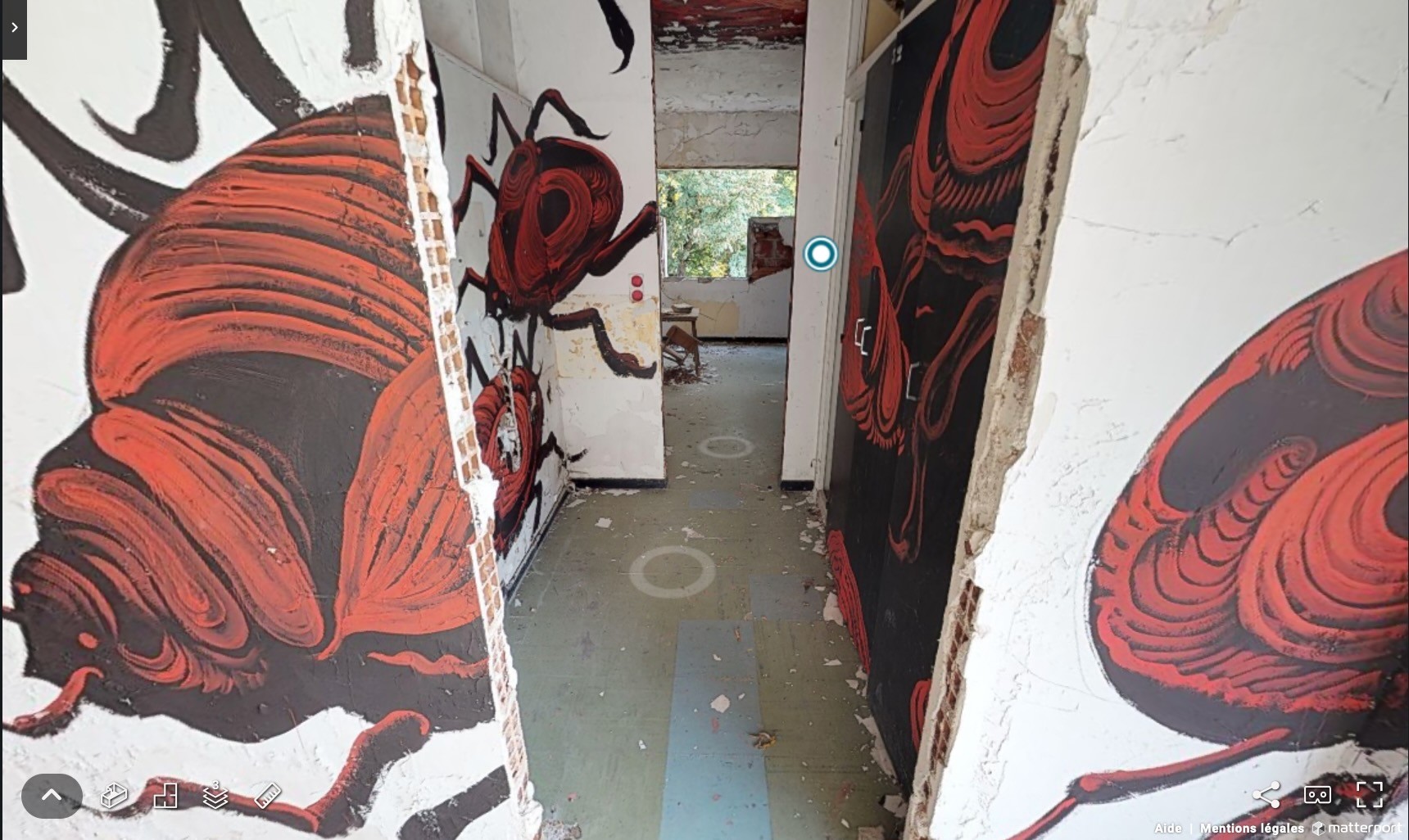
Outside, bright red-and-black firebugs seemed to accompany our every step. They gathered across walls, pathways and windowsills.
In French, they are called gendarmes.
I painted a swarm leaving the main room, crossing corners and spreading into the closet, shower area and hallways. Their small bodies broke across the straight lines of the architecture.
The name offered an association I couldn’t resist: a miniature procession carrying a faint echo of the authority that had occupied the place. Beyond the imposing face, these little figures continued on through the abandoned rooms.

So few hours left almost no distance between discovery and execution. A conversation, a walk, some stuff pulled from the weeds — and then the work was underway.
I’m still not entirely sure how well the installation held together, particularly among the other graffiti and street-art interventions taking shape around it. Photographs struggle to convey the sequence of entering, turning and finding yourself between those elements.
But it remains a vivid experience: making something with the light, objects and uneasy histories a place offered, before there was time to settle on a more comfortable response.
With thanks to Sébastien Lis, and to Alla Goldshteyn — one of my favourite free spirits — for setting the visit in motion.
© Jason Botkin