
Projects
2017 · SeaWalls: Artists for Oceans
Churchill, Manitoba
I fell in love with Churchill as soon as I stepped off the plane.
At the meeting of boreal forest, Arctic tundra and marine waters, life seemed to be everywhere: wildflowers, foxes, migratory birds, snowy owls, and more belugas than you could reasonably know what to do with. Polar bears, too, required a particular kind of attention.
I came to paint through SeaWalls: Artists for Oceans, an undertaking brought to life by Kal Barteski in partnership with the PangeaSeed Foundation. Kal’s passion for painting and polar bears is matched by her capacity to bring people together. “Artist” barely begins to describe what she does.
Flood damage had cut the railway connecting Churchill to the south. The community was facing enormous uncertainty as artists arrived to work throughout the town.
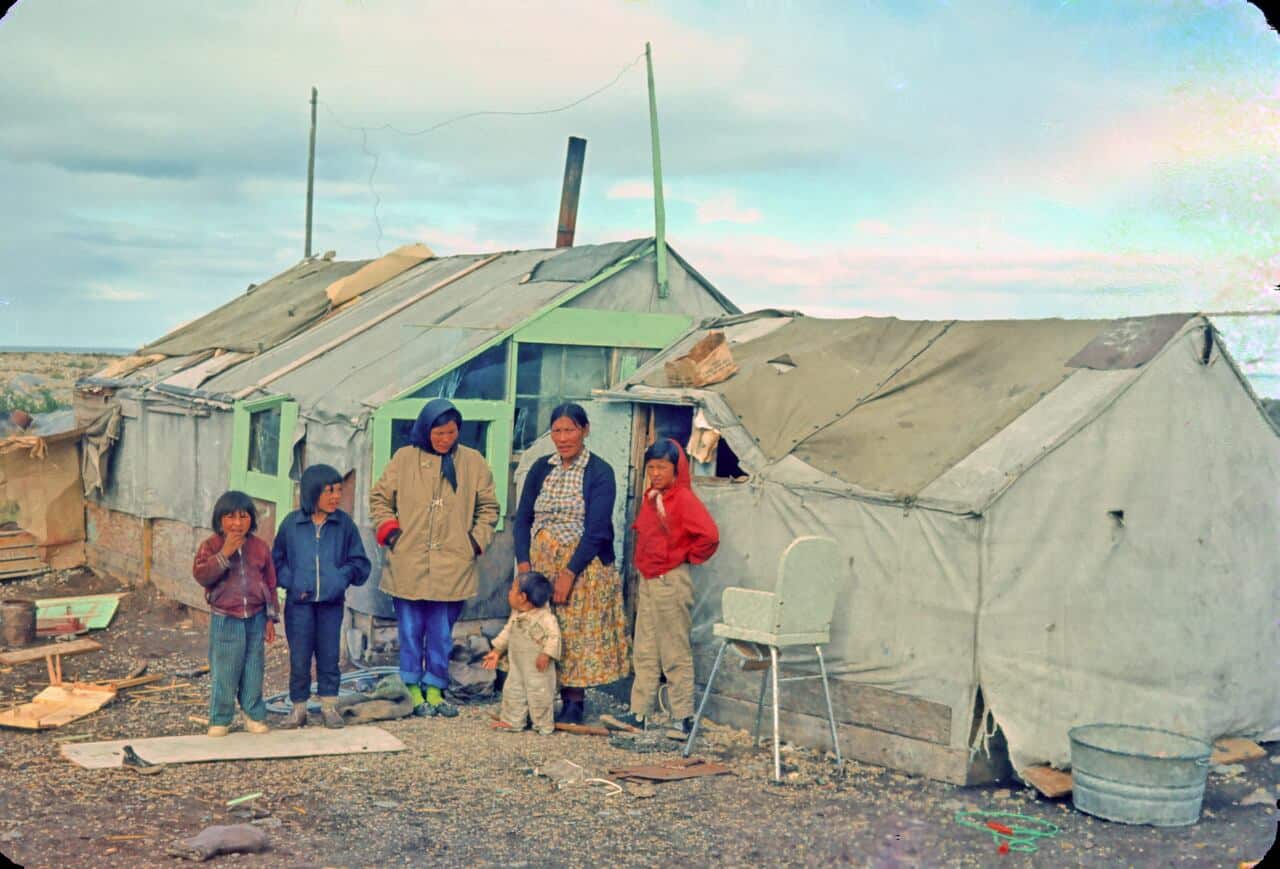
While there, I learned more about the history of the Sayisi Dene — the People of the East.
In 1956, the Canadian government forcibly relocated the Sayisi Dene from Little Duck Lake. Displacement and subsequent moves brought families into devastating conditions around Churchill, including an area known as Camp 10.
People who had sustained themselves through generations of knowledge and relationship with the land were left struggling for food and shelter. The consequences carried through families and across generations.
This history became central to my painting.

A photograph became part of the history behind this wall. An image of harvested caribou was presented as evidence of wasteful slaughter, without understanding the winter provisions it showed. That interpretation helped justify removing the Sayisi Dene from their homeland.
This stayed with me as someone who makes images for a living. What a photograph shows and what someone claims it means can be very different things. Here, people with the power to act imposed an interpretation without listening to those whose way of life they were judging.
I was painting caribou into a history in which an image of caribou had already helped do enormous harm.
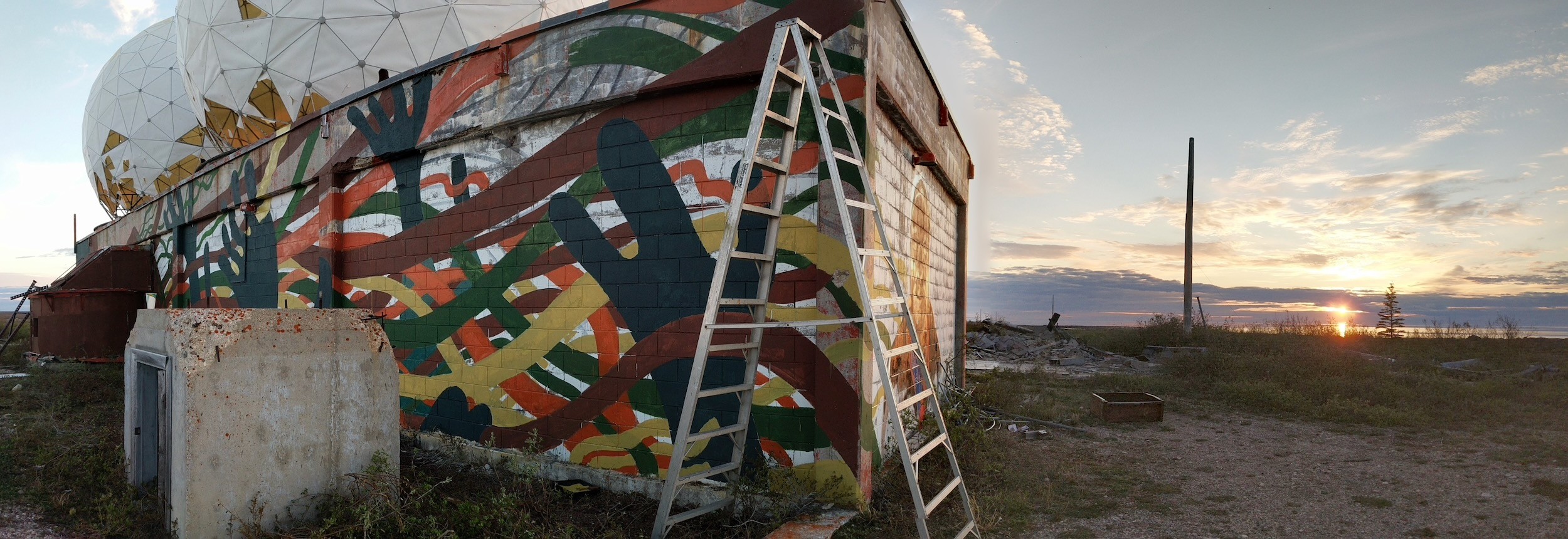
My wall belonged to a long-abandoned radar research facility outside town — a strange structure carrying its own residue of northern ambitions.
Caribou antlers move through a river of ribbons, streaming like braided, coloured hair from the central figure. Skeletal hands rise in prayer.
On the wall, I painted words from Elder Betsy Anderson of Tadoule Lake:
“There was a time when all the people and all the animals understood each other and spoke the same language.”
Those words stayed close throughout the work. Around us was a landscape alive with relationships I was only beginning to understand. Behind the painting was a history of what happens when that understanding is disregarded.

My son Sebastian joined me on this project, which remains one of its greatest gifts.
At the time, he was SeaWalls’ youngest team member, contributing to food-truck shenanigans and a little underage driving. Having him there brought another kind of life to the long days of production.
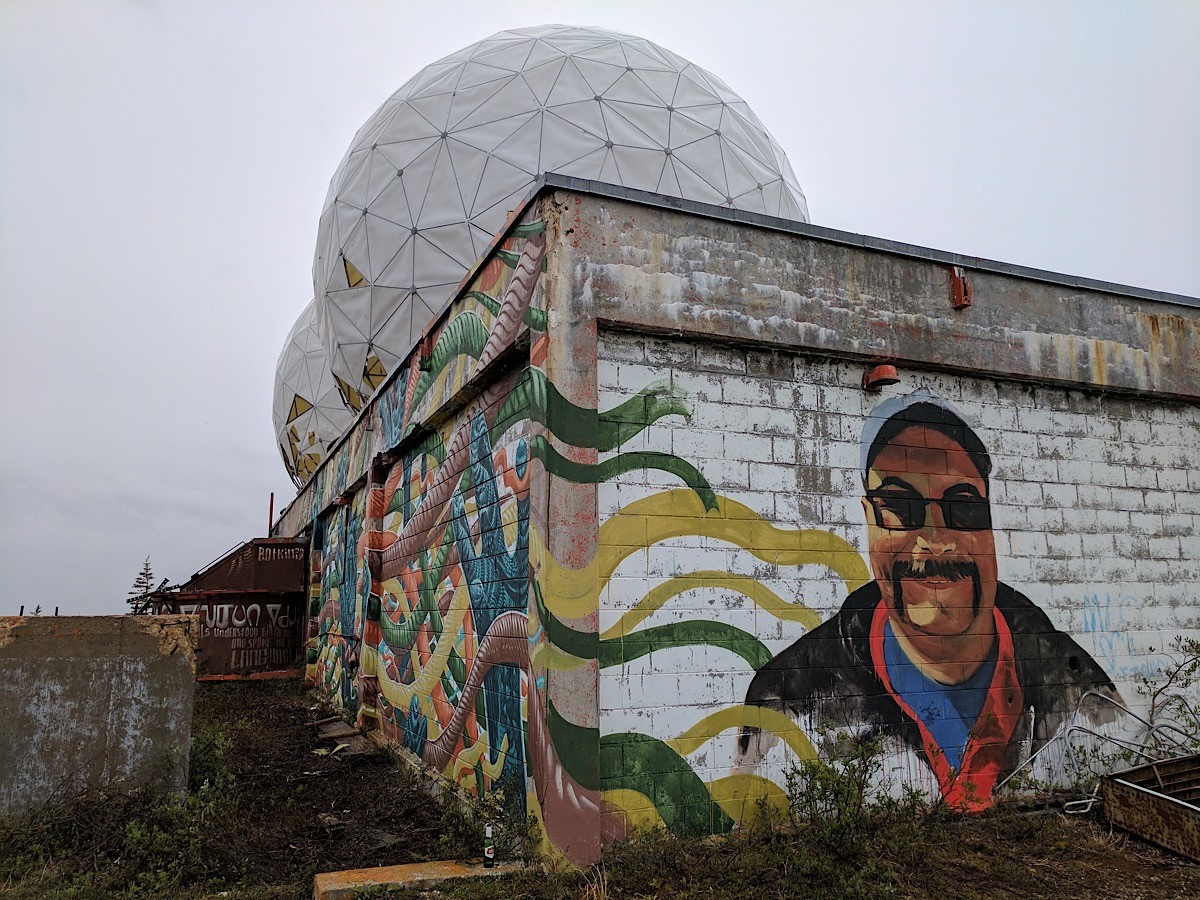
My dear friend Kai Kaulukukui painted the adjacent wall. His subject was the man who sat with us each day, shotgun in hand, watching for curious polar bears.
There is something wonderful about that arrangement: the person keeping an eye on us becoming part of the work itself.
Safety first. Portrait second.
Camp 10 is not my story to claim. It changed how I thought about the responsibility of making an image public.
The photograph behind this history had helped turn a way of life into an accusation. Working on the mural, I kept thinking about how images shape what people believe — and what they become willing to do.
That power is part of what draws me to public art. A painting can make room for a conversation, bring a neglected history into view, or give someone a reason to look more closely.
In Churchill, those possibilities were being tested across a whole town. Kal had brought us together to paint, and in doing so made room for encounters that reached well beyond the walls.
I think of Sebastian, Kai, our patient bear guard, and the people who welcomed us. I think of Betsy Anderson’s words, and how much there was to learn simply by being there.
© Jason Botkin