
Projects
2024 · Festival des Arts Urbains de Laon
Laon, France
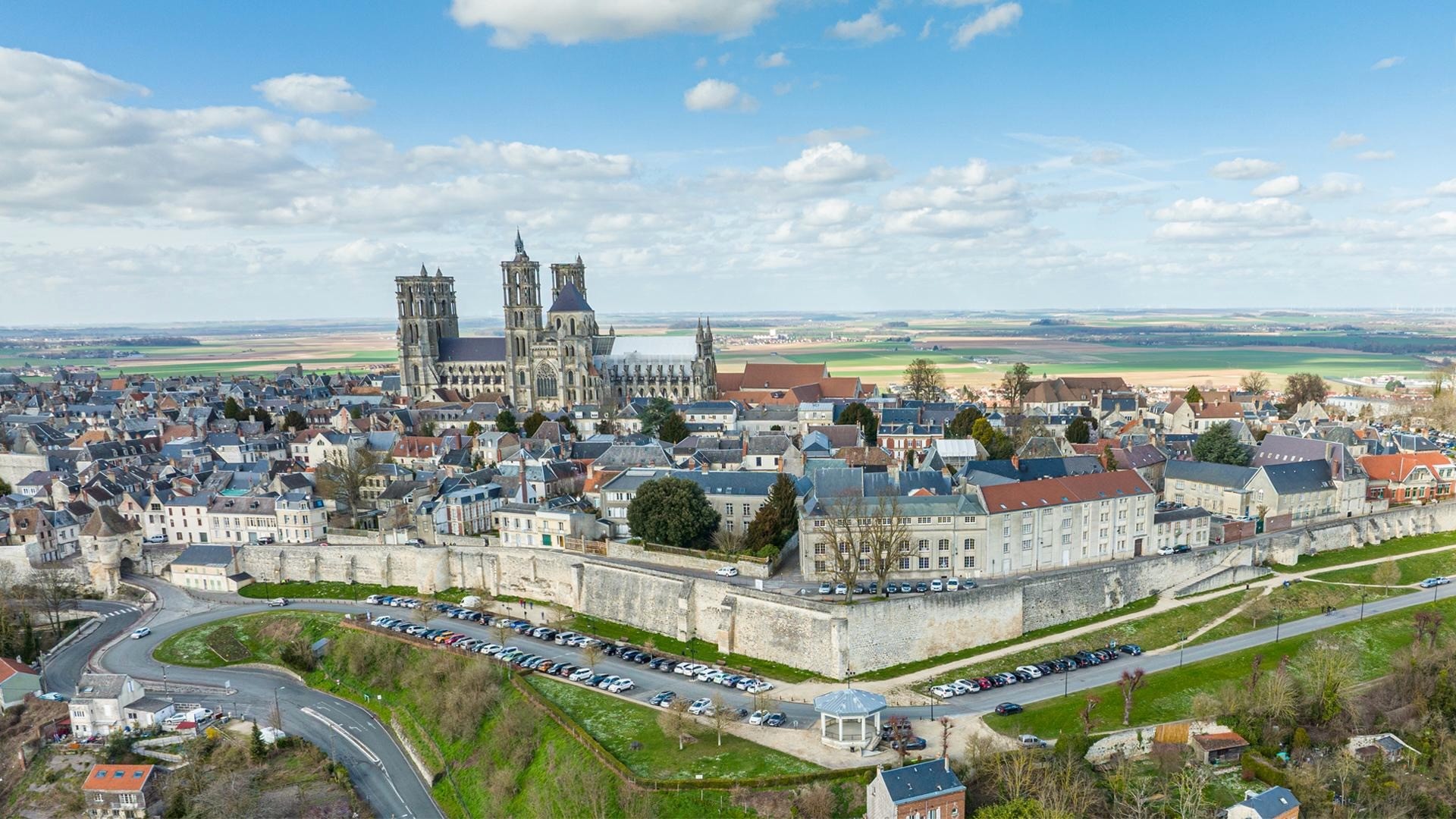
Creating a mural in Laon’s historic centre calls for a certain humility, especially as a guest.
I spent my first days listening and looking. The cathedral rises above the hilltop, its presence extending through the surrounding streets. I had been invited to paint a relatively small wall in the courtyard of a social services building.
Per my style, I arrived without a finished design.
The invitation grew from relationships already underway.
Several members of the organizing team had come from Festival America, which had previously brought me to the Paris area. Valérie Etesse had also spent years supporting public art projects in Laon, including work with C215. This was the team’s first full mural festival in this form, backed by considerable experience in bringing people and events together.
Valérie and team created an unusually welcoming atmosphere. The work was visible across the city, but there was little fanfare around the festival itself. Behind that quiet presence was an enormous amount of organizing — complicated, demanding work sustained by commitment well beyond what the pay could account for.
We shared meals each day, cafeteria-style. Evenings brought people together in conversation, alongside a carefully curated programme of events. Several artists accustomed to moving between festivals spoke of this one as a favourite.
a beautiful feeling of family was in the air..

At Notre-Dame de Laon, I began collecting fragments: hands, faces, drapery, wings – details shaped by people whose work had outlived them by centuries.
A sculptural scene of Christ after his removal from the cross held my attention. I kept returning to the gestures around him — the hands supporting his body, the figures attending to someone who could no longer support himself.
Those gestures offered a connection to the place where I would be painting, and to the people who worked there.

Valérie and I had just come off Racines du Ciel, where a paint-order mix-up had left us with slightly too little paint for that project and considerably too much for this one.
There I was, looking at a small wall and a substantial supply of brown and titanium buff.
The obvious solution was to paint more walls – quickly.
Standing in the courtyard, I could see how much more compelling the work might become if it surrounded the people moving through it. Modern additions offered further surfaces to paint, distinct from the protected historic buildings.
I very last minute asked whether the composition could extend across multiple surfaces – any and all available.
Changing plans in the middle of a festival creates work for people already juggling artists, equipment and schedules. Valérie and her team helped secure the additional permissions through relationships built over years of working in the city.
With their support — and plenty of chocolate paint — I took on the larger space.

An angel and a gargoyle, found in separate places around the cathedral, became neighbours. Drapery moved between windows and architectural features. Enlarged hands reappeared across the walls.
The composition developed around the courtyard’s openings, corners and changes in surface. Images I had encountered individually began to share a space, their relationships shifting as visitors moved between them.
The gestures could now surround the people entering the building.

Brown and titanium buff gave me a palette close to the surrounding stone. To build the weathering, I added brown to whatever dirty water I could find, then rolled it onto the walls and let it run.
The drips stained the surface, dulled the colour and interrupted what I had already painted. I worked back over those passages, building subtler shading through repeated layers of paint and wash.
I wanted something of the water staining and uneven age I had been looking at around the city. Dirty water turned out to be useful material.
That willingness to make do is part of what I love about urban art. A paint order goes sideways; you work with what arrives. The site offers a problem, and the problem becomes part of the method.
At its best, there’s a DIY spirit to the work that I feel at home in: resourceful, willing to improvise, and not too precious about itself.

At one entrance, I painted:
La main que tu tends à l’autre, c’est à toi que tu la tends aussi.
The hand you extend to another is also extended to yourself.
The words were a reflection on mutual aid, and a tribute to the people working in the building every day.
The cathedral provided a language of gestures. The social services centre gave me a place to consider what those gestures might mean in daily life: supporting someone, receiving them, remaining present when they are vulnerable.
The imagery retained its religious origins while finding another context among people whose work involves accompanying others through difficulty.

Taking on the courtyard meant missing more of the festival’s shared life than I would have liked. Long days on the walls left less time for the evenings and conversations that made the gathering special.
But I wanted to give my best to people who were already giving so much. The additional work was one way to return the welcome and contribute to something I hoped would continue.
Much of my working life has developed through exchanges like this. People meet, work together, tell someone else. One invitation leads to another. Over time, those relationships make room for projects that would have been difficult to imagine at the beginning.
I think of it as exchange in abundance: putting more into an opportunity than the agreement alone requires. Here, that impulse met a team willing to help an expanded idea become possible.
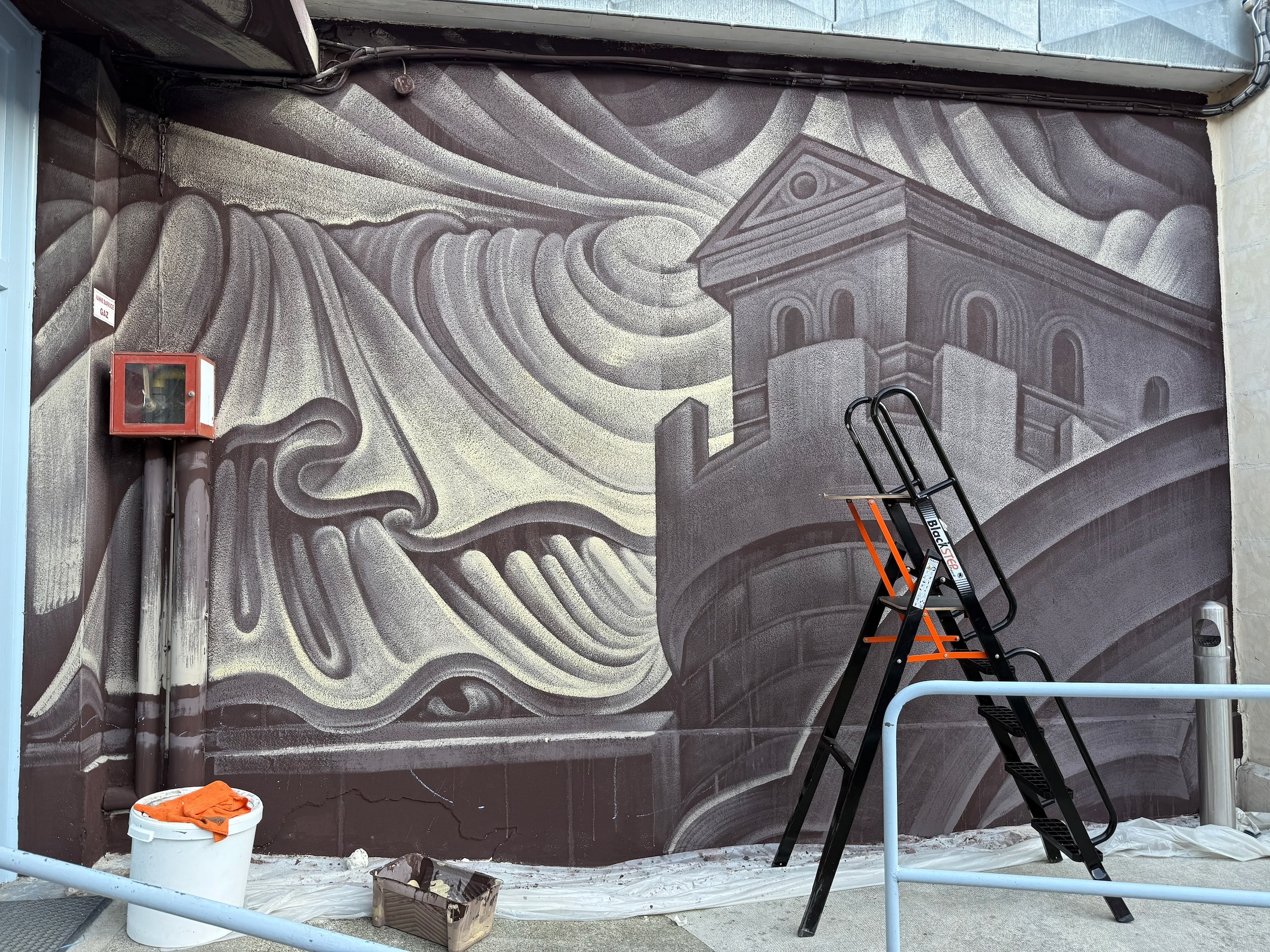
A quiet dedication within the mural remembers David Vitu (1974–2024), whose efforts helped create the conditions for the festival to grow.
The finished courtyard carries work that visitors may never see: the conversations, permissions and relationships behind the painted surfaces.
I came to paint one wall. What became possible around it owed a great deal to the people who made room for more.
© Jason Botkin