Traces
Galerie Nunc, Paris, France
Much of Broken Strings began in my Montréal studio, with about three weeks to make a collection of articulated plywood figures.
That meant cutting all the parts with a jigsaw, shaping, painting, and assembling them. I joined the pieces with little butterfly nuts found at a local hardware store. They were expensive. I bought a ton of them.

Flexible joints let me keep changing the figures’ positions, in service to a living composition. A bent elbow or a turned head changed how one related to another on the wall.
The whole thing could move, but first, it had to get to Paris.

The figures needed to be tough enough to travel and light enough to carry.
I packed them between paper and cardboard, then wrapped the whole thing in plastic — a plywood burrito tucked under my arm for the flight.
It arrived in one piece, without costing a kidney to ship.
Those practical considerations shaped the work from the beginning. Limited time, limited money, and some fairly ridiculous logistics became an invitation to try something I hadn’t done before.
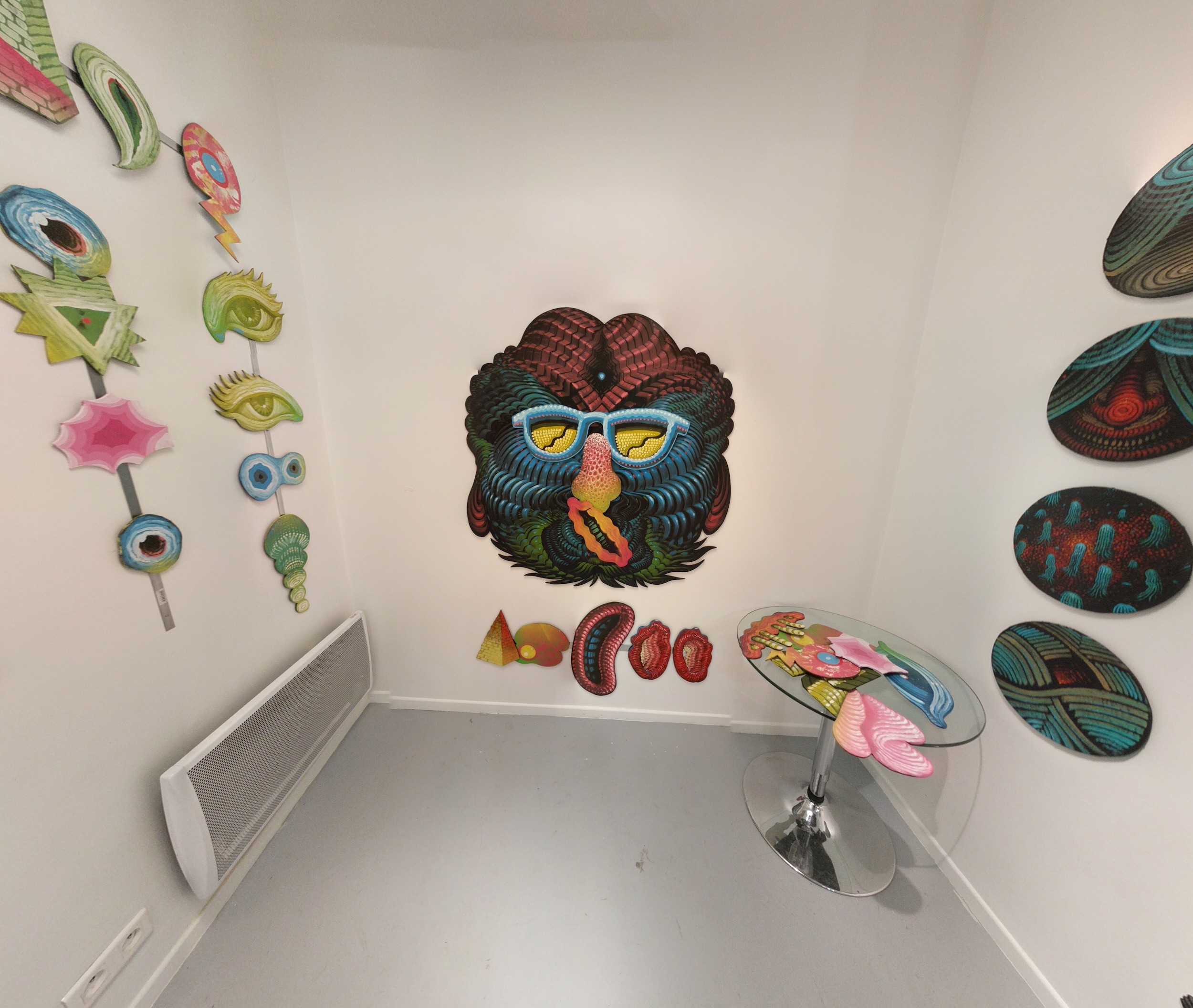
At Galerie Nunc, I wanted to extend that opportunity to play to the people coming through the door.
I made several large plywood faces directly in the gallery, building on experiments I’d begun for a Lightspeed office commission and later explored with Jeremy Shantz in Cancún.
Imagine a psychedelic Mr. Potato Head:
vibrant colours, textures, and interchangeable facial features.
Visitors could rearrange the pieces and make their own strange portraits. A different mouth, another pair of eyes, and the whole character changed.
The work might have looked precarious, but was built to be handled – people needed to get their hands on these things.

I also made printed paper versions of black-and-white puppet figures. You could take them home, cut out the parts, and glue or pin them together to make creatures of your own.
I liked that the process could continue somewhere else, with materials that asked very little of anyone.
People took to it.

As an exhibition, it was a terrible commercial proposition.
I’d tried to make pieces small enough for little Paris apartments, but they were still weird.
A few sold. But I hadn’t come expecting a great financial windfall. It was an opportunity to spend time in Paris, and work with folks in that community who have become very dear to me.
Keeping my belt tight gives me more room for projects like this, where I can take chances without needing every experiment to pay for itself. Sometimes accepting that a project might make very little is part of making it possible at all.
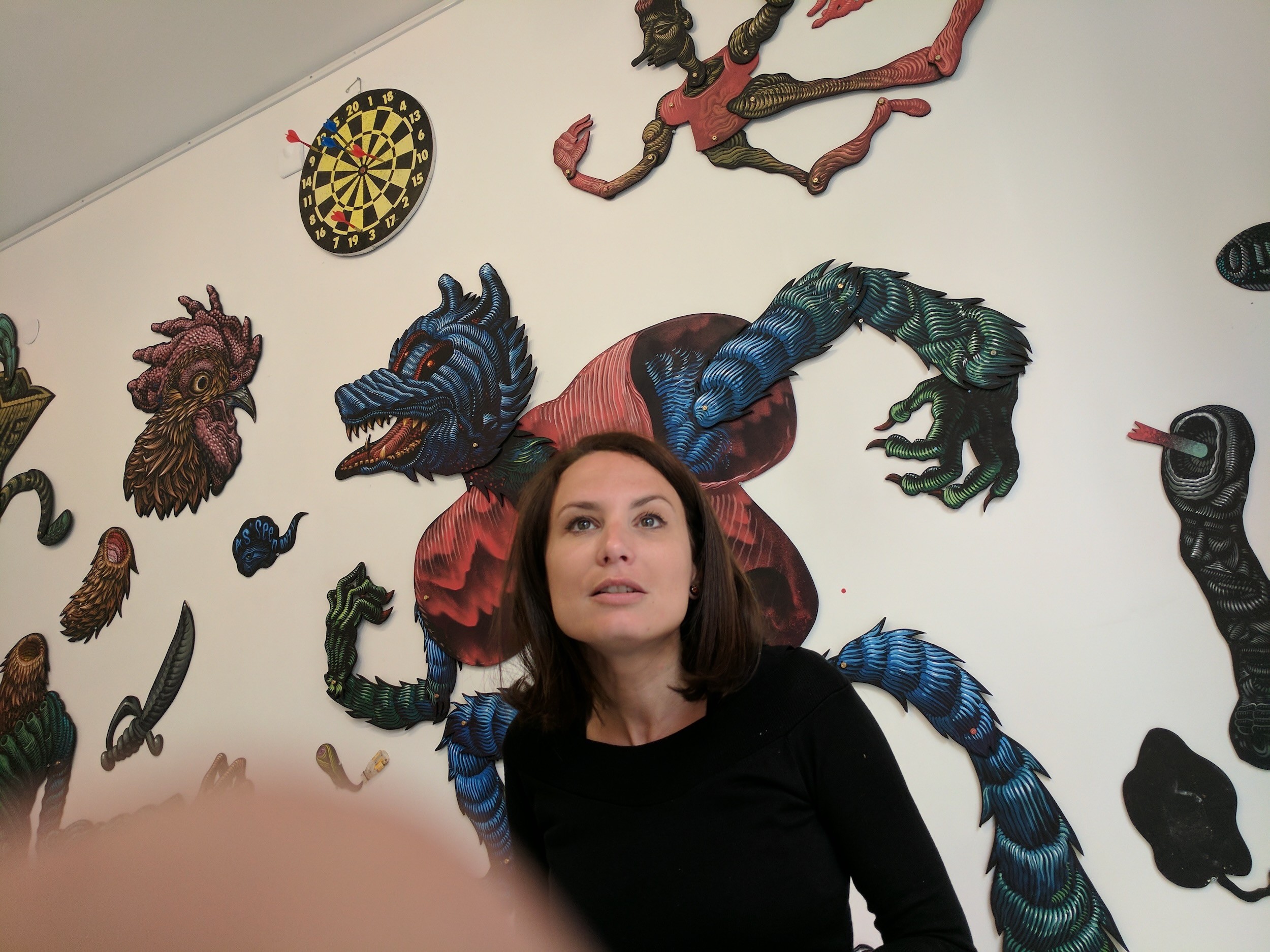
After the exhibition, the remaining work was donated to a school in Paris, where students followed a self-directed, computer-based curriculum. Nicolas, who looked after its art collection, took it in.
I was glad the work had somewhere else to go.
I’d spent so much time making things that could be moved around. It felt fitting that they should move along.
Merci Pascaline.
© Jason Botkin