

When Tim and I began EN MASSE, there wasn’t much room for the work we wanted to make, or for many of the artists we wanted to make it with.
We weren’t prepared to wait for that to change.
We created events, brought people together, and found places where we could work at a scale that would have been difficult to reach individually. We wanted the opportunities we made to extend beyond us.
That was part of the artistic intention from the beginning.
Artists are usually recognized through the objects they make. The work of creating an invitation, assembling a group, or earning enough trust to bring unfamiliar voices into a gallery is harder to point to.
I paid close attention to who we brought into the room, how we worked together, and what each opportunity might open up for someone else.
The drawing, the gathering, and the opportunities that followed were connected parts of what I wanted to make.

Tim and I first began talking about these possibilities as students at the Alberta College of Art and Design.
After we relocated to Montréal, informal drawing sessions grew into more ambitious experiments. In 2009, a partnership with Galerie Pangée gave us a place to bring the work into public view.
Thirty local artists worked in the gallery over the month leading up to Nuit Blanche, building a collaborative drawing more than ten feet high and 150 feet long.
Most worked in the underground arts, with little access to galleries or representation. Together, we could work at a scale none of us could manage alone.
People came to watch. Artists brought friends. Friends brought other friends. There was somewhere to linger and watch the work unfold.
Tim and I understood the value of a good party. Atmosphere is everything – we wanted people to want to be there.
By Nuit Blanche, the lineup stretched around the block in temperatures approaching –30°C.
That evening was the opening. The drawing had been made by the invited artists, but the gathering around it had been growing strong for a month.
The exhibition stayed up for another couple of months.
Invitations and commissions poured in.
I brought in more artists and started learning what it meant to organize something beyond a single exhibition: assemble crews, work with clients, and carry that collective energy into unfamiliar settings.
It was new territory. We were figuring it out while it was happening.
It took off like a storm.
Drawing together asks something precious of you.
Someone else’s line enters the space you were working in. An idea changes as another person takes it somewhere you hadn’t imagined, or perhaps wanted. You have to decide what to hold onto and what to let happen.
There is room for individual voices, but none of us gets to determine the whole.
Over time, I came to recognize how much of my work involved caring for those conditions: helping people enter the process, finding room for different approaches, and keeping enough trust in the room for something unexpected to happen.
Many of the relationships formed through EN MASSE have lasted far longer than the surfaces we drew on. Others belonged to a single afternoon.

EN MASSE helped change the opportunities available to the artists around it.
In Montréal, we made space for work and people who weren’t finding it elsewhere. As the project travelled through Québec, across Canada, and into communities in the United States, Europe, and Asia, that circle widened.
A project could bring artists into an institution for the first time. Working together could begin a collaboration that continued elsewhere. An invitation could give someone access to a scale of work they hadn’t yet dreamt of.
These effects are harder to document than a finished wall, but they belong in the account of the work.
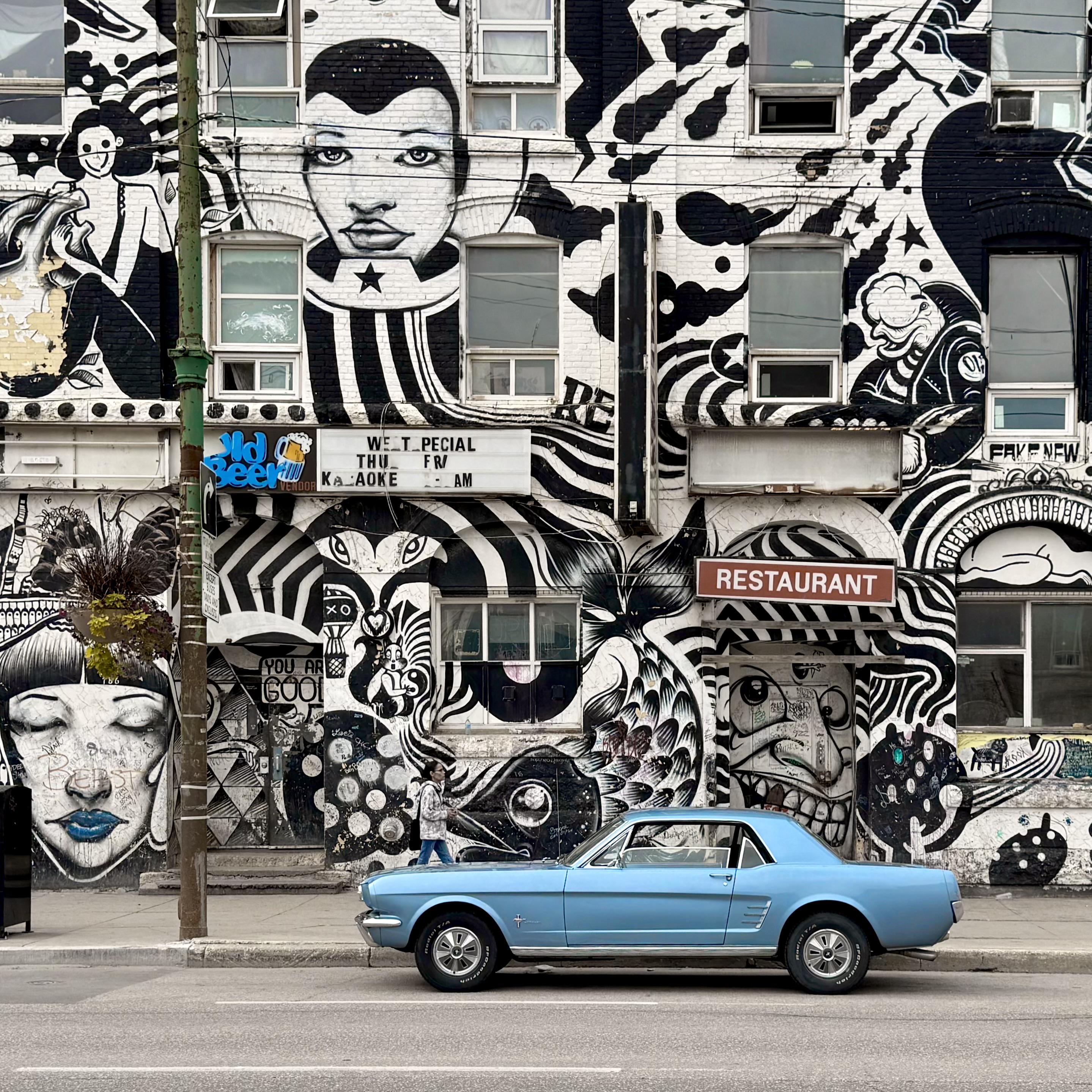
What remains after the drawing is finished?
The setting shapes how we draw together. Explore four ways EN MASSE takes form.
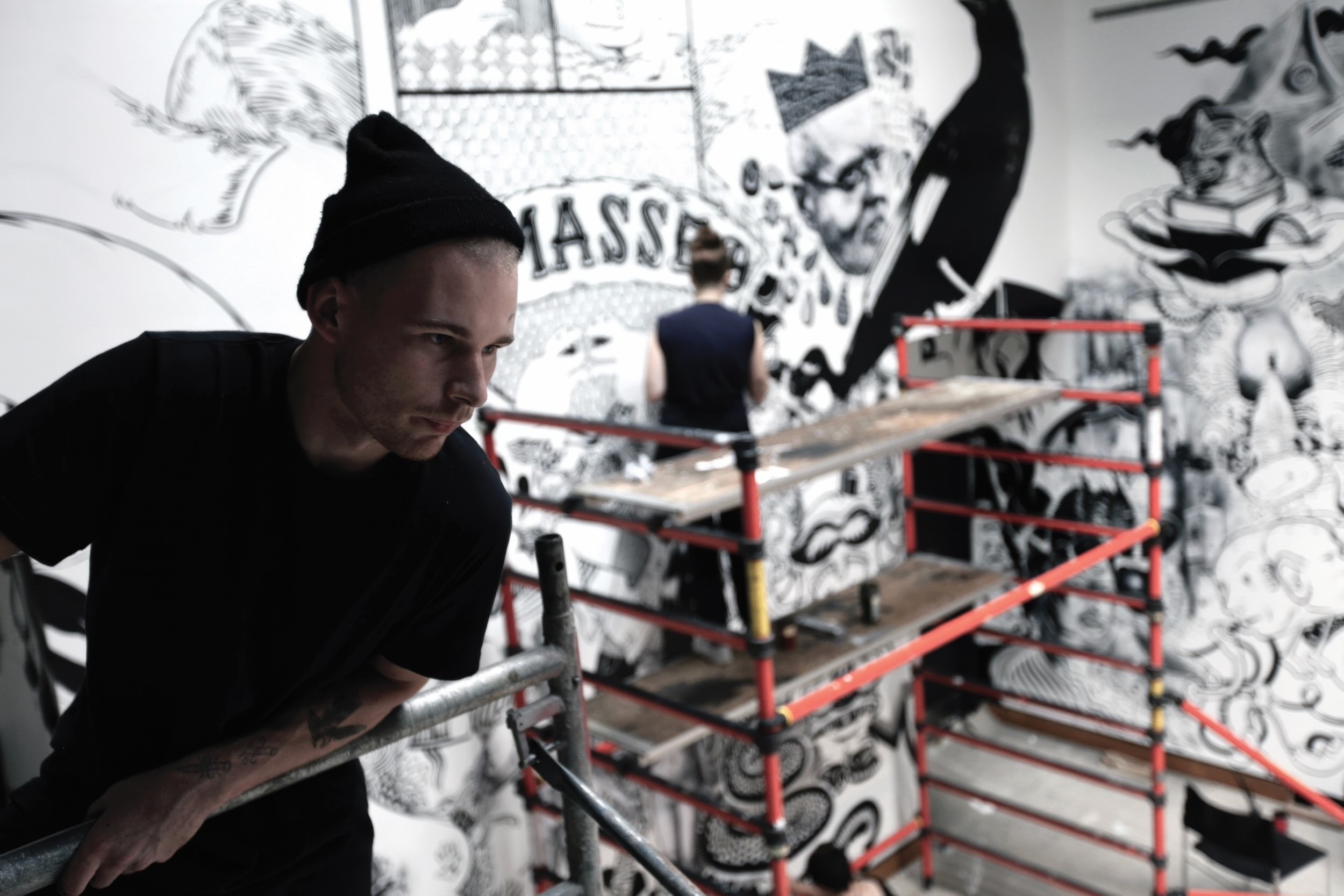
Cultural Institutions
Museums, galleries, and artist-run centres invite collaborative drawing into exhibition spaces, where the creative process becomes as visible as the finished work.

Everything else begins there.
Start a conversation →
© Jason Botkin